How Gender Plays a Role in Today’s Society
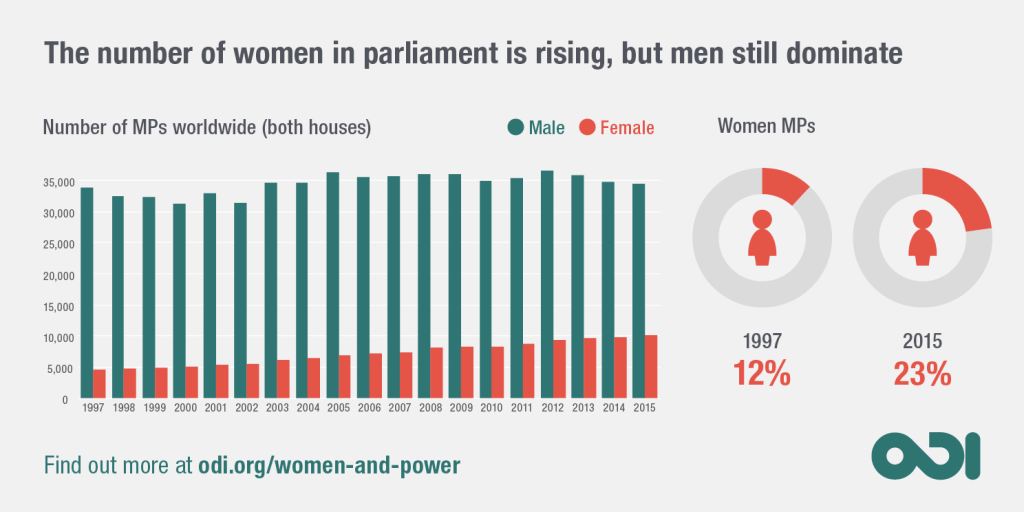
In today’s blog post, we will be looking at the theory of feminism and how it applies in today’s society. Feminism theory is aim to understand that gender in society has inequality. According to Healey in the Race, Ethnicity, Gender, and Class textbook, “efforts toward social change and gender equality are often referred to in the modern context as feminism … feminism itself are ideas and movements that have sought gender equality.” (Healey, 2019 pg. 394). In today’s society we still see unequal rights between males and females. Males are still dominating the work force’s leadership position and are still being paid far more than females. Reasoning behind this is because our ancestors have left us this thought hundreds of years ago, that men are naturally better leaders and naturally more intelligent. While women are meant for supporting roles.
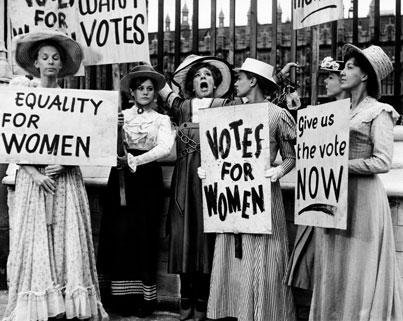
Many movements have started with the back thought of feminism, such as the women’s movements which is also known as the stage of waves to fight for equal rights and equal pay. The women’s movements came in series of three waves. The first wave was the beginning of the fight which started in the mid 1800’s. In the website History Fight for the Vote, states that in 1848, a group of abolitionist activists mostly women, but some men gathered in Seneca Falls, New York to discuss the problem of women’s right… that all men and women are created equal, that they are endowed by their creator with certain inalienable rights. With this being said it, took nearly seventy years just to pass the 19th amendment which gave women the right to vote. The second wave began in the 1960’s when women felt that their only role were to take care of house chores such as cleaning, cooking, and taking care of their kids. Not only did this push women towards another protest but the fact is that they felt as they were just property of men. According to Healey, “the concept of “marital rape” was still an oxymoron- husbands did not need consent from their wives” (Healey, 2019 pg. 405). This clearly showed that men believed women were simply their property. During this wave many women wanted to become independent and get certain jobs where only men were allowed. From 1963-1968 many actions were taken to ensure that women would be able to become economically independent. The third wave was the fight for women of color. Although some believe the first two waves were for every women others believed that women of color did not get a loud enough voice. Many women of color wanted the ability to become stay-at-home mothers to care for their child but were denied due to the Jim Crow Law. In the article “Black Feminism and Third-Wave Women’s Rap: A Content Analysis, 1996-2003”, it states that young black feminism from its white counterpart by highlighting young black feminists’ sense of connection to their foremothers’ struggles and their efforts to redefine black womanhood. Many women of color believed that the first two waves were mainly meant for white women.
As seen in the video, in 2018 males are still being paid more than females within the same sports. The video shows two surfers, a male and female, who both won a surfing tournament, yet the female was paid only four thousand while the male was paid eight thousand. People were outraged because women who put in the same amount of work were getting paid far less than men. Keep in mind that the surf competition was held at the same beach on the same day. More information about the amount of anger people have against this surfing competition can be found at https://nehandaradio.com/2018/06/28/surf-competition-accused-of-sexism-over-prize-money/ . Surf competition accused of ‘sexism’ over prize money- Nehanda Rad… Organizers of the junior surf competition is South Africa have been accused of sexism after discrepancies in the prize money awarded to the male and female winners.

Not only do men get paid more than women, but they also get better positions in their job field. In the past many people believed women were meant for only supporting roles and we still have not been able to get past this statement left behind from our ancestors. In the article “A Study of Current Make Educational Leaders, Their Careers and Next Steps” states that the dominance of a masculine stereotype continues to be associated with educational leadership roles. Not only do cooperate continuously have males as their leader, but also within the education system. Not only in high paying jobs do we see males dominate in leadership but also in sports, such as head coaches. More information about this can be found at https://www.usatoday.com/story/sports/ncaaf/2018/10/03/study-white-men-still-dominate-leadership-positions-in-fbs/38035399/. USA Today Study: White men still dominate leadership positions in FBS A diversity study finds that white men still “overwhelmingly” fill leadership positions at top-level college sports programs and conferences.
In conclusion we, as a society, need to give more thought at what our ancestors have carved into our minds that males are naturally better suited for leadership positions. Recent studies have found that in many cases females are actually better suit for the job, yet the males are given the position. Once we can see that males and females are equally fitted for the job we can finally be able to say that it’s okay if females want to become firefighters and males to become nurses. Not every job should gender specific. If we can cross this hurdle of gender inequality, we can help children not be afraid to go after their dream jobs.
Reference List
Chard, R. (2013). Pollak Library – Loading Your Proxied Resources. Retrieved 17 April 2020, from https://journals-sagepub-com.lib-proxy.fullerton.edu/doi/full/10.1177/0892020613498522
Chepp, V. (2015). Pollak Library – Loading Your Proxied Resources. Retrieved 17 April 2020, from https://www-tandfonline-com.lib-proxy.fullerton.edu/doi/full/10.1080/03007766.2014.936187
Healey, Joseph F., Andi Stepnick, and Eileen OBrien. 2019. Race, Ethnicity, Gender, & Class:the Sociology of Group Conflict and Change. Thousand Oaks, CA: SAGE Publications, Inc.
(2020). Retrieved 17 April 2020, from https://www.history.com/topics/womens-history/the-fight-for-womens-suffrage
 Social Inequality 2020